Case study
Mapping the global expert landscape for a complex respiratory mechanism.
at a glance
The Challenge
Our Approach
The Outcome
01
The situation
A global pharmaceutical company was developing a therapy targeting a specific biological mechanism associated with a serious respiratory event.
The client team needed to identify approximately 250 suitable experts worldwide to support scientific engagement and insight generation across key markets: China, France, Germany, Italy, Japan, Spain, the United Kingdom, and the United States.
The objective was a clear and defensible understanding of the expert landscape around the respiratory event itself, the underlying biological mechanism, and the broader group of respiratory conditions associated with that mechanism.
02
The challenge
The scientific landscape presented several unusual difficulties.
Fragmented scientific communities
Although the biological mechanism linked several respiratory conditions, there was no single scientific community examining them together.
Immunology researchers were studying the underlying mechanism; respiratory clinicians tended to focus on individual diseases. No clearly defined field spanned all of them.
A distorted publication landscape
One of the conditions linked to the mechanism was SARS-CoV-2.
Over the previous five years, most conditions within the group had generated 4,000 to 5,000 scientific publications. SARS-CoV-2 had generated more than 400,000.
Relying heavily on publication analysis across related conditions would have produced a landscape dominated by SARS-CoV-2 authors, many of whom were not specialists in the underlying mechanism or the broader condition group. Excluding SARS-CoV-2 research entirely would have removed a substantial body of relevant scientific activity.
Defining the relevant expert community
The client faced a fundamental question: which experts genuinely understood the mechanism and the associated respiratory event, rather than simply being highly visible in one of the related conditions?
Answering that required building a new understanding of the scientific landscape rather than relying on conventional publication metrics. Without this contextual work, expert identification would likely have been dominated by SARS-CoV-2 publication activity, potentially obscuring the clinicians and researchers most relevant to the underlying mechanism.
03
our approach
Kendle Healthcare conducted a structured analysis of the expert landscape across several interconnected scientific domains.
Kendle Healthcare conducted a structured analysis of the expert landscape across several interconnected scientific domains.
3.1
Multi-layered literature analysis
Four complementary literature analyses were conducted: publications examining the biological mechanism; publications addressing the respiratory event; and publications addressing the broader respiratory condition group both including and excluding SARS-CoV-2-related research.
This structure allowed the team to identify patterns of influence while avoiding distortion from the unusually large SARS-CoV-2 publication volume.
3.2
Analysis of expert influence
Our scoring models are developed specifically for each project. Large-scale KOL platforms typically apply the same scoring framework across all disease areas. Our analytical frameworks are designed only after desk research and expert interviews have revealed how influence actually operates within the relevant scientific field. The indicators used to assess expertise reflect the realities of that specific community, not generic metrics.
Beyond publication analysis, the project examined a wide range of influence indicators:
-
Clinical guidelines and consensus statements
-
Professional societies and specialist working groups
-
Journal editorial boards
-
Congress faculty and conference presentations
-
Clinical trial investigator networks
-
Scientific awards and emerging researcher indicators
In total, 625 markers of influence were included, and every relevant KOL interaction activity within them captured and analysed.
Each expert’s involvement was scored using contextual criteria. Conference activity, for example, was assessed based on the importance of the conference, the relevance of the presentation to the client’s scientific focus, the type of session, and whether major clinical trial data was reported.
3.3
Expert interviews
A series of interviews were conducted with clinicians and researchers working in the respiratory event, the biological mechanism, and the associated conditions. The interviews explored which researchers were most respected within each area, how much awareness existed across the different conditions, and which conferences, guidelines, and scientific forums carried the most weight.
These discussions provided important context that desk research alone could not have captured.
04
what we found
A finding that desk research could not have surfaced.
Despite three months of extensive desk research and analysis of hundreds of scientific markers, this group had not been visible, and the client had been unaware of its existence.
This illustrated the limits of relying solely on publication databases and formal scientific markers. It also reinforced why analytical frameworks need to be adapted to the realities of each specific scientific landscape.
The discovery reshaped the understanding of the expert landscape. The leader of the working group came from a clinical specialty the client had not originally identified as a priority, illustrating how contextual analysis can reveal influential experts outside expected disciplines.
05
The output
The project delivered a detailed expert landscape comprising 433 potential experts worldwide.
For each expert, the client received structured intelligence including:
-
Institutional and professional information
-
Research interests and clinical specialty
-
Qualitative insights from peer recognition
-
Detailed scoring across multiple indicators of influence
-
Involvement in guidelines, trials, conferences, and scientific organisations
-
Digital and professional visibility
0
Potential experts worldwide.
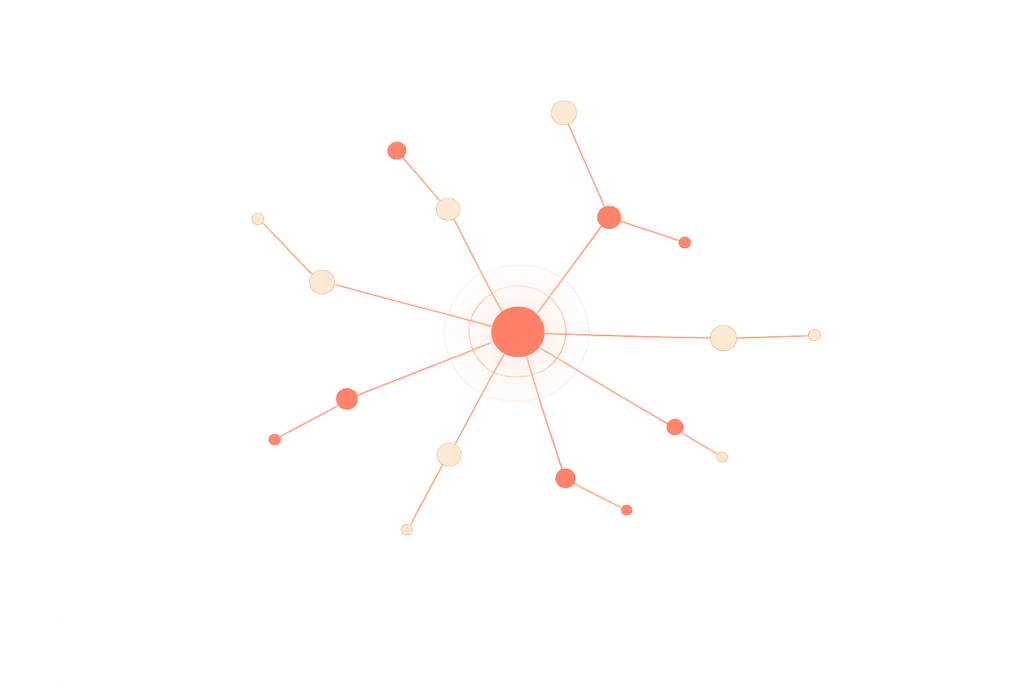
The analysis also included network analysis of expert relationships by country and specialty, country-level expert landscape summaries, analysis of scientific influence across the different respiratory conditions, and synthesis of insights from the expert interviews.
The Outcome
The project gave the client a clear and defensible understanding of a highly complex expert landscape. It revealed how expertise was distributed across different respiratory conditions, which experts bridged multiple scientific communities, and where influence was concentrated within specific countries and specialties.
We know how difficult it is to identify opinion leaders in this area. It's extremely challenging. This is an amazing piece of work.
The client has since commissioned five further projects from Kendle Healthcare.